Author Archives: Joan Treppa

A Presser for a Pressing Issue…

My gratitude goes out to my publisher for this amazingly crafted Press Release. I can only surmise that it can and will open doors…

PRESS RELEASE     (Kirk House Publishers                                                                                            For Immediate Release

NEW EDITION OF GROUNDBREAKING BOOK “RECLAIMING LIVES” SHINES A SPOTLIGHT ON JUSTICE DENIED  

Burnsville, MN – June 9, 2025 — In a compelling blend of true crime and social justice advocacy, Reclaiming Lives, Third Edition: Pursuing Justice for Six Innocent Men by Joan Treppa delivers a searing indictment of wrongful convictions—and the extraordinary effort it takes to overturn them.
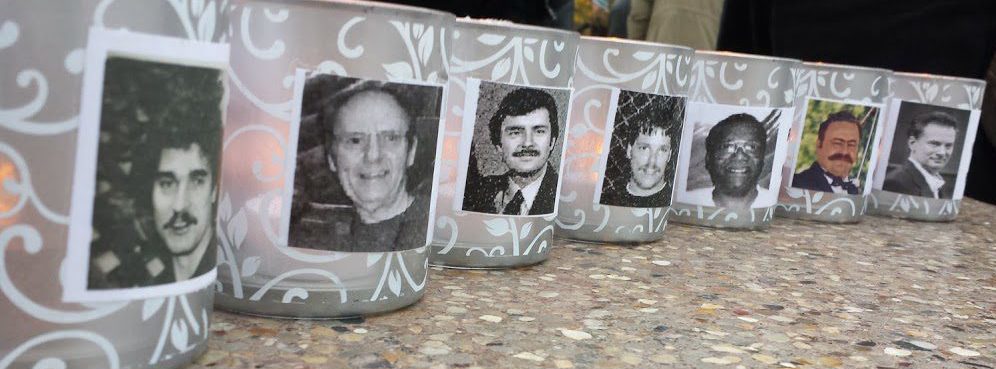
The book revisits the tragic 1992 death of Tom Monfils, a paper mill worker in Green Bay, Wisconsin. The high-profile trial that followed ended with six men—the “Monfils Six”—being convicted of murder. But the case was fraught with inconsistencies and unanswered questions. Years later, a determined Minnesota woman with no legal background took notice—and refused to look away.
Treppa’s journey began in 2009 when she uncovered new, disturbing information about the case. Her quest for justice brought her into direct contact with the families of the accused and a retired crime scene expert, ultimately spurring a fresh investigation.
“Reclaiming Lives” is more than a true crime narrative; it’s a call to action. Through detailed storytelling and personal insight, Treppa illustrates the staggering challenges of overturning wrongful convictions, even in the face of compelling new evidence. Her writing breaks
down legal complexities and exposes systemic flaws, offering readers a deeply human story of perseverance, hope, and transformation.
“Reclaiming Lives teaches the reader why it is not only critical to prevent wrongful convictions from occurring in the first instance, but also why the criminal justice system must be far more willing than it has often been to correct these injustices after they are shown to have
occurred,” says Steven Z. Kaplan, former post-conviction counsel for Keith Kutska, one of the Monfils Six.
Joan Treppa is a writer and social justice advocate living in the suburbs of Minneapolis. A survivor of childhood bullying, she found her voice in speaking up for the voiceless. Her motto, “Nothing about me truly matters unless I matter to others,” has driven her advocacy work. The first edition of Reclaiming Lives earned three national independent book awards and continues to resonate with readers and reformers alike.

Reclaiming Lives, Third Edition: Pursuing Justice for Six Innocent Men is available now in
paperback through Kirk House Publishers and major booksellers 

For media inquiries, review copies, or interview requests, please contact:
Ann Aubitz at Kirk House Publishers 
1250 E 115th Street Burnsville, MN 55337
612-781-2815 | ann@kirkhousepublishers.com | www.kirkhousepublishers.com

Bird’s-Eye (Witness) Testimonial…

My son, Jared, told me about an experience he had while being vetted for jury duty. With it being closely related to my writings and to the photo lineup I use in my class visits using his photo, I asked him to write about that experience. The following is the piece he sent to me:

Essay by Jared Manninen:

I’ve lived at Lake Tahoe for 20 years, and one of the defining characteristics of being local is that we’re often summoned for jury duty multiple times per year. Usually just once, but I’ve received the call three times in a single year on multiple occasions. Now, that doesn’t necessarily mean that we actually have to report to the courthouse each time and then serve on a jury. Usually, we’re waived off the night before via an automated phone and online message. But prior to the day, we still essentially have to clear our schedule just in case.

In all fairness, though, I’ve only had to physically report to the courthouse a handful of times. But a few years ago I was summoned and, not only was I required to show up in person, I was also put in the potential jurors’ box to be vetted by the prosecutor and defense attorney. Mind you, this vetting process can take multiple days and involve hundreds of citizens. Basically, the attorneys only question a dozen potential jurors at a time. So the whole thing is laborious and time-consuming.

I don’t recall the nature of the case in which I was summoned because the attorneys asked broad questions so as not to give away any of its details. They didn’t want to influence the jury pool, after all. However, one of the troubling aspects that I do recall about this particular case was that the prosecutor admitted that he had no evidence beyond eyewitness testimony. I don’t even think he mentioned that he had any type of circumstantial evidence to back up the testimony. So one of the questions posed to us was whether or not we would have a problem with this scenario.

Now, the prosecutor did preface this by addressing the fact that crime procedural shows such as CSI and NCIS were very popular and have convinced the American populace into believing that DNA and other physical evidence is everywhere for the taking. However, this is obviously not true, and we all acknowledged that real life is not nearly as formulaic as a 42-minute TV crime show.

I was the only person in the juror box, however, to raise my hand in opposition to the fact that we’d only be hearing eyewitness testimony. The prosecutor, therefore, zeroed in on me and questioned my rationale.

The photo lineup Jared and I created to illustrate the real pitfalls of mistaken witness identification

I described the wrongful conviction case in which my mother was working. And based on our many conversations, as well as the books, articles, and interviews that I had read about wrongful convictions, I learned that without corroborating physical evidence, eyewitness testimony is not reliable. In fact, according to the National Registry of Exonerations, mistaken witness identification (i.e. eyewitness testimony) happens in 27% of all wrongful conviction cases. That’s one in four! In addition, the percentage of mistaken witness identification cases of those exonerated through DNA testing is approximately 75%. So I was very dismayed by the fact that the entire case on which I was potentially going to be a juror was relying completely on eyewitness testimony.

Needless to say, after the brief conversation the prosecutor dismissed me as a potential juror. He clearly didn’t want me influencing anyone else in the room. And this was fine because I had no interest in being part of a “he said/she said” type of case. Honestly, I can’t even believe a situation like that would find its way into the courtroom.

In the years since that jury summons, my belief about the fallacy of eyewitness testimony has only grown stronger. And, of all things, this has been a direct result of becoming an avid birder*. But I’m a birder who carries a camera with me.

I know this may sound off-topic. However, birding is essentially a lesson in eyewitness testimony. Literally, I go outside to see certain birds. I specifically train myself to notice unique field marks, flight patterns, shapes, and behaviors that help me to identify those birds. But I still get it wrong sometimes! This is why I always carry with me a camera to capture physical evidence (i.e. photographs) to either confirm or correct my identifications.

And it’s not just me who sometimes incorrectly identifies bird species. Everybody does! Even some of my friends, who I consider to be experts, occasionally misidentify a bird. Our debate ends quickly, though, once I show them the photo that I took of the bird in question.

So expert “observers” still make mistakes. Now, imagine being a random person walking down the street minding your own business when you casually notice out of the corner of your eye somebody running out of a convenience store (after it was robbed, for example). It should be fairly obvious why eyewitness testimony wouldn’t be reliable under those circumstances. Ultimately, atmospheric conditions, physical obstacles, distractions, fatigue, mental biases, and other factors conspire to erode our perception of what we believe we’re seeing.


Jared in his element, in the mountains at Lake Tahoe (Photo courtesy of Jared Manninen)

Jared Manninen is an artist and writer who has lived at Lake Tahoe since 2005. He’s an avid hiker, cross-country skier/instructor, and amateur naturalist who works in the outdoor recreation industry. As a result of this immersive experience, his art, photography, and writing all reflect his appreciation for Lake Tahoe and the surrounding Sierra Nevada Mountains.

The purpose behind my art is to not only share my love of Lake Tahoe but, more importantly, to inspire you to go outside and have your own adventures (regardless of where you are).”                        —  Jared Manninen

*Incidentally, Jared participated in the Tahoe Big Year for birding in 2024. He came in first place by identifying (and providing proof with photos) the most bird species in the Tahoe region. He recently gave a talk about that experience at the Tahoe Public Library.

Here is an audio (1 hr. 11 minute) version of his talk which includes photos of the bird species he photographed throughout the year.

A Haunting Resemblance…

April 19, 2025 marked the thirty-year anniversary of the Oklahoma City Bombing, a horrific incident classified as the largest terrorist act ever committed on US soil. A fitting day to revisit the following exercise:

You be the judge:

Middle image is a police sketch. Which of the adjacent photos is the better match:  A or B?

                           A                                            Police Sketch                                         B

Why I administer this test: 

At the time of the incident, it hit…well…sort of close to home. Based on the results of administering this exercise in the past few years, especially when testing young adults, it could have marked a definite turning point in the life of my family.

When the bombing happened in 1995, a police sketch of the suspect was circulated on the news. Mike and I felt it was a stark resemblance of someone close to us, someone who was also in the military at that time, but stationed in another state. In fact, calls came in from all over the country from family members who expressed that same concern.

In this case justice was served. However, when the perpetrator, Timothy McVeigh, was finally caught and his face appeared in news clips, our first impression was that his facial features didn’t match the police sketch as well as the facial features of the person we knew.

With that said, my point with this exercise is less about guessing the correct answer and more about illustrating how unreliable police sketches/photo lineups are. I use this exercise when giving talks that include the main causes of wrongful convictions, and more specifically, mistaken identity which happens in 27% of wrongful conviction cases.

The results:

The majority of young people typically choose image A. I’ve used this exercise in classrooms and have actually witnessed a unanimous or majority vote for image A.

Those who know of the incident typically choose image B for obvious reasons.

A significant number of participants are not able to choose and say it could be either A or B.

When I ask participants to disclose why they choose one image over the other the answers are all over the map. They cite the ears, eyes, nose, hairline, lips, or chin as defining characteristics. One participant cited the length of the neck as a factor. What’s more, many attribute similar likenesses from both of the images to the police sketch. For instance, while some feel the ears in image A best match the police sketch, others claim the ears in image B best match the sketch. The point is that we all see things differently based on our innate biases and interpretations which is why photo lineups are so unreliable.

Time for full disclosure. The correct answer is B.  

But who is the person in image A? That’s our son, Jared! In 1995, he was in the Marines and was stationed in California. Years later, while preparing this exercise for a school visit I asked Jared if he remembered the incident and if he had a photo I could use for the lineup. He said he had never seen the sketch so I sent it to him. He was shocked by the resemblance to a photo of himself from his military days which he sent to me! The photo I’ve used is that photo.

What if Jared had been in Oklahoma City during the investigation? Could he have been arrested based on his resemblance to the sketch? I think so. Many others think so. And the fact that Timothy McVeigh was executed for this crime adds another layer of fear that this could have been our son’s fate! A possibility that will forever haunt us…

Note: Another layer in this saga about our son, Jared, in relation to eyewitness testimony will be forthcoming soon in a very insightful upcoming blog. Stay tuned!