Category Archives: Featured Exoneree

A Promise Delivered…

In October of 2013, my husband and I, along with numerous other supporters of the Wisconsin Monfils case, attended a Benefit for Innocence; an annual gala hosted by the Innocence Project of Minnesota.

Claire Micoliczyk, Ardis Kutska, Brenda Kutska, WI exoneree Audrey Edmunds

Teresa Tario, WI exoneree Michael Piaskowski, Shirley DeLorme

Cal Monfils with WI exoneree Michael Piaskowski

Brenda Kutska, Kim and Deb Johnson

Mike Treppa, Erik Stewart

Linda and Johnny Johnson

The Benefit was held at the (former) Graves Hotel in Downtown Minneapolis. While the others engaged in conversation with fellow guests, examined items on display for the silent auction, etc., I stood alone canvasing the reception room, touting a small white paper sack containing special gifts. As was typical, I was on a mission, and on the lookout for the guest of honor and keynote speaker for that evening; California exoneree, Brian Banks.

I’d made a solemn promise to deliver precious cargo in person to Mr. Banks that evening; a task I had spent months preparing for. I was excited but a little nervous about my success in doing so, now that the time had come. As worried as I was about being bothersome, I was also very determined to keep my promise in delivering these special items.

I watched silently for the arrival of Brian Banks. I turned around and there he was, within a few feet of where I stood! The moment was nigh, with no time to waste. I took a deep breath as I approached him. Unable to calm my nerves, I introduced myself and blurted out that I had come bearing gifts. He was gracious despite my awkwardness, which had a somewhat calming effect. Still, I could hardly contain my excitement in showing him these treasures! Brian appreciated my sincerity and was visibly moved by this humble gift.

Joan explaining the contents of the paper bag to Brian Banks 

Brian is the man he is today because of his tragic story. He wound up in prison because of a lie…

Brian Banks was accused, arrested, and later charged with two counts of forcible rape and one count of sodomy with a special circumstance of kidnapping. The year was 2002. He was sixteen years old with a dream of a lifetime waiting at his doorstep. Brian was, “…a blossoming football star and had verbally accepted a four-year scholarship to play at the University of Southern California.”  But instead of fulfilling that dream, Brian was falsely accused of rape. The only place Brian was going was to prison, forcing him to postpone, even abandon any chance of pursuing a career in professional football. He was 26 years old when the California Innocence Project successfully aided in his exoneration in 2011. Brian actively tried once again to resume his football dream but he was not successful.

People tell lies. It happens all of the time. But how does one reconcile being sent to prison because of one? 25% of all exonerations regarding a rape charge end up being resolved because the accuser knowingly makes a false statement and later recants. In this case the accuser admitted, during a video-taped interview, that she had lied. But not before Brian had endured eleven combined years of being in prison and on probation. Never a thought was given to the consequences of her actions. Then after Banks was released, her aspirations were to reconnect and let “bygones be bygones”! Although charges, perjury or otherwise, were never brought against her, a lawsuit eventually was.

At the Benefit, Brian said he had spent a lot of time feeling angry over what had happened to him. But he was unwilling to waste any more time on those emotions. He now focuses on his work with the California Innocence Project, helping other wrongfully convicted people regain their freedom. And he does it with the same passion as when he played football.

What was in that paper sack that was so important? The book, The Monfils Conspiracy, which documents the Wisconsin Monfils case I’ve been involved with. Second, and equally important, were hand-written letters, addressed to Mr. Brian Banks, from five Wisconsin prisoners*, wrongly convicted of murder in this case. Reynold Moore, Dale Basten, Michael Hirn, Keith Kutska, and Michael Johnson had all been given the chance to share their deepest thoughts, hopes, and dreams with Brian Banks; a man who fully understands the importance of focusing on what truly matters and how challenging it can be to never give up.

Brian now has his own book which was published in 2019:

A movie about his story hit theaters on August 9, 2019. Here’s the official trailer.

* All but one of the men mentioned in this posting have been paroled as of 2019. Keith Kutska still remains behind bars but his quest for freedom is ongoing. Sadly, Dale Basten, who was released in June of 2018, died nine months later.

What Is Mine Is Now Also His…

This month’s featured exoneree is one I met close to eighteen months ago. He’s my son, Jared’s age and was released from prison on my birthday in 2012. That day is now referred to as his day of rebirth so for both of us it holds plenty of meaning. I cannot help but contemplate how vastly different our reasons are for its significance but I am overjoyed to share this special day with such an admirable friend.

p1040337

Jared Manninen with exoneree Damon Thibodeaux and girlfriend, Veronika  

Damon Thibodeaux is the 300th person nationwide and the eighteenth from death row to be exonerated by DNA evidence. He spent fifteen years on death row in Angola Prison in Louisiana for the rape and murder of a family member. He was under lock down for twenty-three hours a day in a cell that measured roughly 8×10 feet at one of the toughest maximum security prisons in the United States. Damon’s story is extremely tragic and the circumstances leading to his incarceration are similar to those found in many wrongful convictions.

After being subjected to nine hours of questioning, Damon admitted he had raped and murdered the victim, even though he had not. It was later determined that the confession was the result of police pressure, exhaustion, psychological vulnerability, and fear of the death penalty. Even so, the case against him had been built around that confession despite the discrepancies within his statement and the lack of physical evidence to prove the victim had even been raped.

Damon was also misidentified. A week after the crime, two women identified him in a photo line up as the man they saw pacing and acting nervously on the evening of the murder. They then pointed him out during the trial as the man they had seen. But when Damon’s case was later re-investigated, it was revealed that the women had seen Damon’s photo in the news before police showed them the photo line-up and the date of the sighting turned out to be the day after the body was found when Damon was already in custody.

Damon shows no anger about his false imprisonment. During a news conference Damon stated that, “Being angry would be a waste of time because…I can’t get the sixteen years back. I have to keep focused on where I want to go and hope I can figure out along the way what I want to do. I can’t think about what could have been, but will be.”

Having hosted Damon in our home along with other exonerees, we’ve found that being around them inspires us to be thankful for the freedoms we have. Despite the horrors that Damon endured, we know him as someone who is genuinely kind and compassionate. Right after he was freed he was quiet and reserved. Now he has learned to live, love, and laugh again. Sometimes when I see or think of him, I say a silent prayer of thanks; both for his good fortune and because what happened to him could have easily happened to Jared, given similar circumstances. I was excited when Jared and Damon had the opportunity to get to know each other late last year. What a priceless experience for any mother on her birthday…or any other day.

**Damon was one of a handful of guests Mike and I hosted the evening that his story was featured on the Saturday, March 29, 2014 segment of 48 Hours on CBS.

An Unshaken Spirit…

When Audrey Edmunds walks into a room, people notice. She’s tall, beautiful, extremely outgoing, and enormously sincere. When I met her at a benefit for the Innocence Project of Minnesota in 2012, I was aware of her tragic past. I was curious about how anyone could survive what she had and still maintain a high spirited disposition. Judging from the kind of person she is now, with her bubbly nature, I knew that we were destined to become good friends. My husband even describes her best as “one of the most positive people” he has ever met. But life for Audrey was not always so uplifting…

In 1996 the characterization of Audrey Edmunds inside a Dane County Courtroom in Madison, WI was vastly different. Each day in court she sat helplessly as her civil rights were violated through an ongoing verbal assassination of her character. She was portrayed as a “monster” capable of shaking an infant hard enough to cause head trauma and death. The significance of the absence of obvious trauma on the child’s body was lost on the prosecutor and irrelevant during the entire court proceedings. Audrey herself was extremely fragile, after having giving birth to her third child only four months earlier. She struggled to keep her composure, sanity, and dignity while being wrongfully accused, charged, and then bullied in the courtroom for the death of this tiny baby. Audrey adored babies. She had nurtured this child and she desperately mourned her passing. Through it all, Audrey’s self-preservation and physical state was in tatters.

Most of all, the direction of the court proceedings caused Audrey dire concern for her three children. Who would raise them if she was convicted? Would she have the chance to get to know her youngest child? The truth is that Audrey was loved by those close to her and was known to celebrate children. Having done daycare in her home for some time she was well liked by the parents who left their precious babies in her care. There were never issues or complaints of questionable behavior by them to suggest that Audrey disliked or became frustrated with the children. The fact that one of the infants in Audrey’s care on the day in question was especially fussy and later died that same day, placed Audrey as the only suspect in this child’s death.

The science surrounding what the authorities would later charge Audrey with; a condition known as “Shaken Baby Syndrome” (SBS) was faulty but was believed to be sound at the time. It was the subsequent evidence that caused her demise. Audrey was charged with first degree reckless homicide. She was terrified of going to prison.

Her sentencing hearing was scheduled for two days after her youngest daughter’s first birthday in 1997. Her worst nightmare was realized. Audrey was sentenced to eighteen years in prison. She would not be there to see her daughters grow up. During her time in prison she decided that for the sake of her babies she’d have to maintain what dignity she had left and never allow herself to sink into total despair. She held on to the belief that she would one day be free. She did her best to stick with a familiar routine, to stay as healthy as she could, and to keep thoughts of her precious girls close to her heart.

Audrey served eleven years of that sentence before being exonerated in 2008 with the help of the Wisconsin Innocence Project. New findings in the science of SBS had come to light and provided the new evidence to confirm her claims of innocence. Her marriage had since dissolved but she would finally reconnect with her three daughters, now young adults. Together they could begin a new relationship. Audrey’s spirit guided her through the challenges she faced on the outside.

For the past few years Audrey and I have remained good friends. Her unshaken spirit, strength, and ability to wear a smile despite the pain she has endured are attributes that inspire me daily. They help me to reject the negative aspects in my life and to embrace as much positive energy as I can.

Audrey is an inspiration to anyone who meets her or has the opportunity to read her touching story publicized in a book entitled, It Happened to Audrey by Jill Wellington. It serves as a testament and inspiration that’s part of Audrey’s mission to create awareness about the fallacies surrounding SBS. Please consider ordering a copy.

Audrey’s story is also featured in a documentary film The Syndrome, by producers Meryl and Susan Goldsmith.

OLYMPUS DIGITAL CAMERA

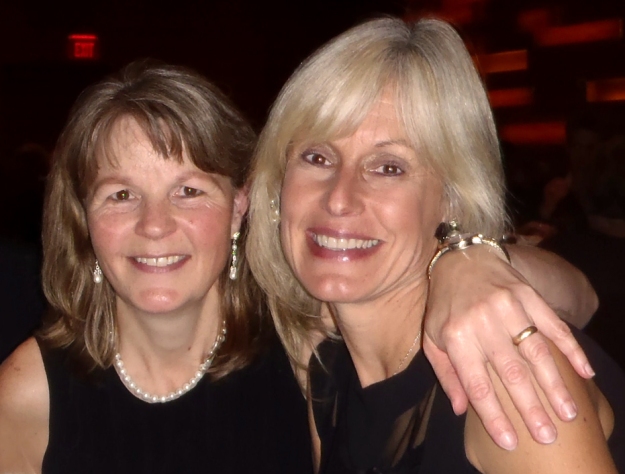
Joan Treppa and exoneree Audrey Edmunds