Survivors and Heroes = True Champions…

“This looks like the place,” I said to my husband, Mike as we hurried to the entrance of the Giddens Alumni Learning Center on the Hamline University campus in St. Paul, Minnesota. I was feeling anxious because we were running late for a screening of the wrongful conviction documentary True Conviction.

According to the trailer we viewed online, the film tells the story of how three Texas exonerees; Christopher Scott, Steven Phillips, and Johnnie Lindsey1 combined forces to form a new detective agency based in Dallas, TX called House of Renewed Hope. Founded by Scott in 2010, the main focus of this non-profit organization is to help other wrongfully convicted prisoners.

Exonerees Johnnie Lindsey, Christopher Scott and Steven Phillips. (Photo used with permission from Independent Lens PBS)                      

Since becoming advocates for the wrongfully convicted, Mike and I have acquainted ourselves with both the courageous survivors of an imperfect criminal justice system and the everyday heroes working tirelessly to correct its many flaws. That evening, Thursday, April 19, 2018, we were about to meet Christopher Scott, one of those true champions who inadvertently dangled on both sides of that fence. After having been targeted, convicted, and exonerated for a crime he did not commit he began a crusade to help others achieve the same ending. He simply couldn’t forget the ones he knew about that had been left behind in prison.

Christopher and I connected on social media before this event was publicized and I was thrilled to learn he was the guest of honor. Being among the last to arrive at the theater-like room—now bustling with people—I hoped we didn’t miss our chance to speak with him before the film started. Sometimes it’s difficult to find the opportunity as an evening progresses and I worried about delivering a special gift to him that I had brought along.

I scanned the room as we descended the stairs. I spotted Christopher sitting by himself and not currently engaged in conversation. “Looks like we’ve arrived in time to introduce ourselves,” I told Mike.

On our way over to where Christopher sat, we said a quick “hello” to M Sheridan Embser-Herbert, director of the Hamline University Center for Justice and Law who was hosting the event. Standing near Christopher were the Innocence Project of Minnesota’s executive director, Nick Vilbas and the Project’s legal director, Julie Jonas.

Nick Vilbas, M Sheridan Embser-Herbert, Christopher Scott and  Julie Jonas (Photo courtesy of the Innocence Project of Minnesota)           

Christopher appeared relaxed as we approached. When I extended my hand to shake his, he sat tall and smiled while returning the gesture.

“Hey Christopher, I’m Joan,” I said. You and I are friends on twitter.”

Christopher’s face lit up and in a distinct Southern drawl he said, “I enjoy our twitter conversations.”

The three of us chatted for a few minutes. I then retrieved a copy of my book Reclaiming Lives from my handbag. “Here it is,” I said to Christopher. “And check out the sticker on the cover. I won a national book award.”

Christopher was grateful for the gift and said, “I’m definitely planning on reading this during my flight home.”

The film was about to start so Mike and I quickly found a pair of empty seats in the row behind and kitty-corner to where Christopher was seated.

The documentary—which aired on the Independent LensPBS program on April 30th—takes the audience on a deeply personal journey of the friendship, commitment, and heartache this trio had experienced. In addition to highlighting the work of their organization, the film reveals the circumstances of each of their wrongful convictions. Christopher’s roots and the repercussions of his absence which presented new and ongoing challenges for his family, are also emphasized in this highly emotionally charged film.

Christopher’s story: Christopher’s troubles began in 1997 when he wound up in the wrong place at the wrong time while driving to a friend’s house in a Dallas neighborhood. A robbery and fatal shooting had taken place that night, somewhere in the vicinity. There was a lot of commotion on the street with squad cars hugging the side of the road and flashing lights engaged. Police officers in the area were on high alert, looking for suspects. As Christopher cautiously drove by, he wondered what had happened. And he realized as he turned the corner that a squad car with its flashers on had pulled up behind him and started to follow him. Christopher reached his destination. While inside his friend’s house, more squad cars showed up and officers surrounded the house. Christopher and his friend were asked to exit the house and lay down on the ground out front. Numerous suspects were brought to the same location and asked to do the same. Christopher was eventually singled out as a person of interest even though his clothing didn’t match the description of the clothing the perpetrators wore. Nevertheless, he was taken to the police station for questioning, handcuffed with his hands behind his back, and placed in a room by himself. A woman appeared with an officer that Christopher recognized as the one who had brought him in. The officer asked the woman if Christopher was the man who had killed her husband. She confirmed that he was.

Christopher was charged with murder and after an eight day trial, received a life sentence. It had been that easy to take an innocent life and turn it into a hellish nightmare.

During the film, I glanced over at Christopher on occasion to observe his reactions to the tragedies that unfolded before us. Each time, I saw tears in his eyes. I guessed that the drive…strength of character…and courage of this man along with an ability to show compassion and empathy toward others—all of which were aptly portrayed in the film—were rooted in the pain he was now feeling as he relived those moments.

(Photo courtesy of the Hamline University Center for Justice and Law)              

After the film, Christopher spoke to the audience and kindly mentioned my name when expressing his appreciation for the support he received that evening. During an interactive discussion that followed, many in the audience expressed their dismay about what they had witnessed, the many lives torn apart, and how widespread the corruption within the criminal justice system is. One woman shared a personal story about her son’s recent wrongful conviction. This spurred a conversation about term limits, elections, and how judges and prosecutors are too easily re-elected especially when they run unopposed. Also mentioned was the despicable lack of accountability of these officials when findings of unethical and unlawful practices—blatant disregard for the law—are exposed.

Exoneree Christopher Scott with Joan and Mike Treppa                                       

Mike and I did get the chance to speak with Christopher at length afterward. I remarked, “You didn’t have a dry eye the entire time, did you?”

“No, I didn’t,” he admitted. “This stays with you,” said Christopher of his experience. “And I don’t expect it will ever go away.”

Also joining the conversation was Mark Saxenmeyer, CEO of The Reporter’s Inc.; a Minneapolis based journalistic production company promoting social change and justice through multimedia storytelling.

“Mark is producing a wrongful conviction documentary called Guilty Until Proven Innocent,” I told Christopher.

Mark went on to explain that this film is still in production. “Ours will run as a series and focus on a number of wrongful conviction cases from across the country,” Mark said. “And the Wisconsin Monfils case will be featured in this series.” .                

Ironically, 2009 was a pivotal year for Christopher…and for me. He had been declared “actually innocent” and was released from prison when the person who committed the murder came forward to confess. He spent thirteen years in prison for a crime he did not commit.

2009 was the year I learned there are innocent people in prison and that they can be convicted based on little, inadequate, flawed or NO evidence whatsoever. I learned that in a significant amount of cases, evidence is even fabricated to fit a specific theory! That year I began my crusade on behalf of the six innocent men convicted in the 1992 death of mill worker Tom Monfils; a murder many of us believe never happened.

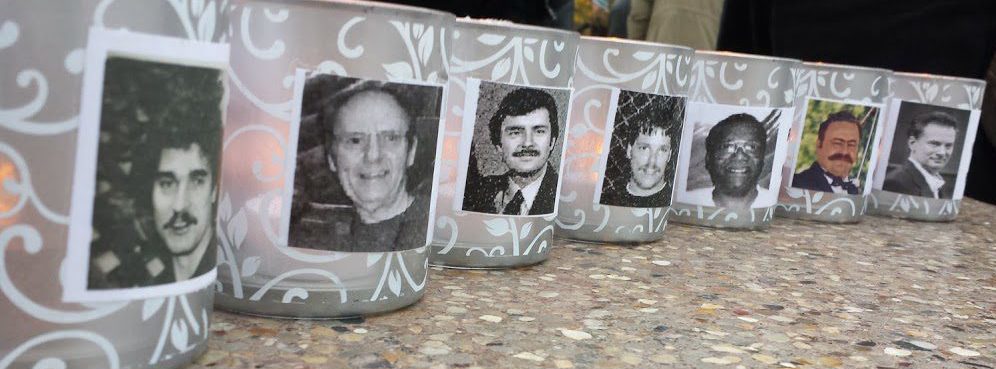
(L to R) Decedent Tom Monfils, convicted men; Dale Basten, Michael Johnson, Michael Hirn, Reynold Moore, Keith Kutska, and exoneree Michael Piaskowski  

I was able to share an incredible irony with Christopher about Jamie Meltzer; MFA program director in documentary film at Stanford University and director of True Conviction. Years ago, through an online networking webpage called About.me, a similar interest in wrongful convictions forged a brief connection between Jamie and me. The timeline suggests he was in the early stages of putting this film together while I was in the throes of publicizing my mission on behalf of the Wisconsin men. Because of Jamie’s affiliation with Stanford University, I had given him the name of Lawrence Marshall—also affiliated with Stanford—as a reference for his project because of my knowledge of the appellate work Marshall had done for one of the six wrongfully convicted men I support.

Final thoughts: I see time and again that until a wrongful conviction touches us personally, we too easily and too often cast the issue aside as irrelevant or insignificant. We must acknowledge that these circumstances destroy families, tear communities apart, and affect our everyday lives more than we could ever imagine. We must celebrate people like Jamie, entities like PBS, and organizations like House of Renewed Hope, The Reporter’s Inc., The Innocence Network, and The Center for Justice and Law, all of whom so willingly and diligently create an awareness and help to change laws and procedures that undermine our freedoms.

Please join me in saying…THANK YOU!

1) As is on the HRH website: “Sadly in 2018, cancer took Johnnie’s life but his spirit lives on and he will forever be a member of the team.”

2) Dale Basten—the oldest of the Wisconsin men—was paroled in 2017 due to his failing health when his medical costs at $92K/yr. became too costly for the WI prison system to absorb. Sadly, in June of 2018, he passed away in a nursing home with his two daughters at his side.

I’m Dreaming of a Fair System…

  “Every child must be made aware…

               Every child must be made to care…

                          Care enough for his fellow man…

                                   To give all the love that he can…”    

–Peace on Earth/Little Drummer Boy lyrics                                                                                                           (By Bing Crosby and David Bowie) 

I’ve always been fond of this verse. Pick any time in our history and it rings as true as the day. These days, as I strive to regain composure from the devastating blow handed down from the U. S. court system earlier this year to Keith Kutska, Michael Hirn, Reynold Moore, Michael Johnson, and Dale Basten; five men victimized by a corrupt system for close to twenty-two years for a crime they did not commit, I’m reminded of Keith’s spirited and powerfully truthful words in his forward for my book…

 “…an innocent person can choose to maintain his own integrity. It is one thing the system cannot take.” – Keith M. Kutska

October 29, 1995: Keith (in background) with his attorney on the front page of the Green Bay Press-Gazette

 We all have a choice in how to live meaningful lives no matter where circumstances take us. I say, let us never disregard the powerful messages coming from the unfortunate victims of our criminal justice system who’ve been silenced but have still found the fortitude to teach integrity through example.

Homemade Christmas card from an innocent incarcerated person 

As a show of support for a handful of these victims, I write letters to let them know they are not forgotten. During this holiday season, I’m sharing one such letter I wrote recently in an attempt to keep alive, the one thing that can elevate an individual’s spirit…HOPE. Because the absence of hope can completely shatter a person’s sense of identity and in some cases, a will to live.  Without hope, all that is left is despair. And isn’t there enough of that in this world already?

Dear —–,                                                                                  12-28-2017

This is a bit late but I’m writing to wish you Merry Christmas. I’m a social justice advocate who became aware of your case through social media. I’m saddened about your situation but grateful for the support you have to carry you through the darkness. I have a number of friends who’ve been victimized by corruption within our judicial system. Some have been exonerated while others have not. I’ve learned so much about life from all of them, especially about appreciation for what I have and how easily a wrongful conviction could affect my personal life.

For the past eight years my focus has been from an outsider’s point of view of a wrongful conviction case involving six Wisconsin men. They were sentenced in 1995 to life in prison for an alleged murder that took place in 1992. I didn’t know the men or their families or even about the case until my sister, Clare, a long-time resident of Green Bay, brought it to my attention in 2009. She had met someone co-writing a book that documents all of the facts in the case. She also knew one of the six men and never believed he was party to a murder.

I eventually read the book and decided to get involved because of how ludicrous the whole scenario sounded. It was clear to me that this was bullying by the law enforcement community. Like yours and so many other cases there was no credible evidence or eyewitnesses to positively confirm that a murder took place. The entire investigation was about building a case around a suspect rather than allowing the evidence to lead them to the truth. I wrote my own book about my observations of what I saw and the similarities of this case with many other wrongful conviction cases. As a non-legal person I also disclosed my personal mission and the process of finding new legal representation for these men and why that was my only option moving forward. I self-published this year and actually won a national book award soon after. Unfortunately, although I found amazing attorneys to reopen the case, the legal process has gone south due to politics and the established ties to the case in the higher WI courts. However, one of the six men was exonerated in 2001 which gives me hope that the others also have a shot. So my intent to find similar relief for them remains steadfast.

On this journey I’ve learned the importance of writing to the men. I understand how much it means to anyone behind bars, especially those incarcerated for crimes they did not commit, to have a link to the ‘outside’ world. So here’s my contribution to the writing campaign set forth by those representing you. It is also a tribute to the vast need for more folks to get involved in this issue or something equally important rather than merely complaining about the ills of the world. I am hopeful that this and the message of how destructive wrongful convictions are to our society also becomes an adequate example to follow for those who read my book. 

                                                                                                 Best of wishes to you, my friend.

                                                                                                                             Joan


All the best to all of you this holiday season and throughout the New Year! 

An Unearthing of Ghosts…

Greeting card drawn and sent from an innocent man held captive by the Wisconsin prison system                                      

A fitting day to share this chapter from my book; triumph that instilled an uncommon but short lived dose of hope and possibilities…

Chapter 33

Legal Woes for the Opposition

Halloween, October 31, 2014. A fitting day to illustrate an unearthing of ghosts still lurking through the halls of the Brown County Courthouse. Finally, twenty-one months of effort put forth by a dedicated legal defense team came to fruition when they filed a 152-page motion, more than one hundred exhibits, and several affidavits in Brown County requesting an evidentiary hearing for Keith Kutska. Close to twenty years later, this small Midwest town was thrust back into legal upheaval.

There was a flurry of news reports on local TV stations and in print. One Green Bay Press-Gazette headline read:

“Defense: Monfils Death a Suicide. New Legal Team Seeks to Have Conspiracy Conviction Thrown Out.”

When this motion was filed, Johnny and I took great satisfaction in knowing we had played a monumental role in its inception. The families were hopeful. We all felt great about it because there was real progress being made. And our miracle was a kick in the legal shins for Brown County. They most likely never expected we’d get this far or that this case would actually make it back into the courts. But there it was. I imagined the clambering behind closed doors to keep their wits about them because the further this moved forward, the more media attention they’d receive. There’d be no escaping public scrutiny or the tough questions that followed. And it’d be a cold day in hell before those questions stopped. This was no longer merely a movement of family members, close friends, and two crusaders from Minnesota. This motion was spearheaded by a respectable law firm armed with an unrelenting dedication and ability to keep on keeping on.

(Photo courtesy of the Green Bay Press-Gazette) 

The main points listed are directly from the original 152-page brief and are as follows:

  • Defense counsel provided ineffective assistance by conceding the State’s homicide theory without consulting an independent forensic pathologist and investigating the evidence of suicide.
  • The State denied Mr. Kutska due process by relying on erroneous forensic pathology, and perjured fact witness testimony.
  • Mr. Kutska has presented “sufficient reason” for this motion.
  • The court should vacate this conviction in the interests of justice.

These excerpts taken from this same document reveal major aspects of a failed investigation in a massively flawed case:

At approximately 7:42 a.m. on November 21, 1992, Tom Monfils—despondent, shamed, and angry—left his work area at the James River Paper Mill and walked toward an entrance of a nearby airlock passageway. As he neared the airlock, he picked up a 49 lb. weight and proceeded through the airlock. He then entered a storage area where his jump rope was hanging on a railing. With both the rope and weight in hand, Monfils walked to a large vat containing approximately 20,000 gallons of liquid. There, he climbed the steps to the top of the vat, tied one end of the rope around his neck and the other end to the weight, and entered the vat where he suffered traumatic injuries and died from drowning in the liquid.

After a 2 1/2 year investigation, Kutska, and five other mill workers were convicted of first-degree intentional homicide and sentenced to life in prison for Monfils’ death. The prosecution’s theory was that after Kutska had learned that Monfils had reported him to the police for stealing a piece of electrical cord from the mill, Kutska fomented “an angry mob” of his “union brothers” that viciously beat Monfils at a water bubbler (water fountain) at approximately 7:45 a.m. and then disposed of his body in the vat at approximately 7:50 a.m. on November 21, 1992. That theory embraced the conclusions of the medical examiner Dr. Helen Young, who concluded that Monfils had been beaten and then placed in the vat where he died.

Dr. Young’s homicide determination was, however, erroneous and rested on a series of provably false assumptions, as well as her ignorance regarding the engineering design and operating factors impacting the movement of Monfils’ body in the vat. As forensic pathologist, Dr. Mary Ann Sens states in her report, Dr. Young also lacked any scientific or medical basis for reliably and accurately determining that Monfils’ death was the result of a homicide and not a suicide. Indeed, there is ample and compelling evidence that Monfils had taken his own life.

Unfortunately, residents and law enforcement officials in Green Bay remained unwilling to appreciate the implications surrounding the firm’s findings that support a possible suicide. This first round of filings caused the county to push back…hard. They resisted the notion the case had been mismanaged. They remained as steadfast as ever in a dying effort to uphold all of these convictions, including Mike Piaskowski’s, in spite of his exoneration in a federal court. At every opportunity, former District Attorney, John Zakowski, defends the biggest case of his career with toxic statements that still fuel a vengeful public. Afterward and in present day, his most vicious attacks are aimed directly at his worst nightmare come true. In reference to the release of Michael Piaskowski he flatly states, Michael Piaskowski “was not exonerated,” rather, he was “mistakenly let go” due to a poor appeals argument by the attorney general’s office. And in a recent interview he did for a documentary about the Monfils case, Zakowski stated, “People tend to say, ‘Well, it’s only circumstantial evidence.’ Circumstantial evidence is many times stronger.”

Euphoria diminished as we waited and waited for a reply from the State. When the State did finally respond, it was as expected. In their response, they argued against every measure of the firm’s brief. However, it was again the defense team’s turn to have one last say in the matter before a final decision was to be reached. The firm was ready, filing their reply brief earlier than the allotted time…

Order a copy of my book on Amazon.

Order a signed copy through this website (via paypal).